
Since its introduction on April 1, 2026, FHO+ has fundamentally changed how physician compensation is earned. Access bonus and comprehensive care capitation were discontinued, while greater emphasis was placed on time-based billing, continuity of care, roster management, and accurate claim submission.
Over the past months, we’ve worked with practices across Ontario to help them navigate these changes. One thing has become clear: physicians who review their FHO+ performance data on a regular basis are better positioned to identify missed revenue opportunities, avoid preventable billing issues, and make informed decisions that support long-term practice performance.
Our enhanced Practice Care report brings your most important FHO+ metrics together in one place, making it easier to understand how your practice is performing without having to piece together Ministry reports and payment statements.
Here are the four key areas every FHO+ physician should be monitoring each month:
1. Time-Based Billing
One of the biggest changes under FHO+ is the increased importance of time-based billing. Approximately 20% of physician compensation is now tied to hourly billing, helping offset the reduction in capitation payments.
However, through our work with DoctorCare clients, we’ve noticed three common challenges:
- Eligible hours aren’t always billed.
- Indirect care time is often underreported.
- Monthly billing limits aren’t being tracked consistently.
A few missed hours each month may not seem significant, but over the course of a year they can represent thousands of dollars in missed revenue.
What to review each month
- Direct care hours: Confirm you’re billing for face-to-face and virtual patient encounters, since falling short can directly impact your revenue.
- Indirect care hours: Track time spent on care coordination, chart review, and follow-up work that doesn’t involve direct patient contact, but still counts toward your overall care requirements.
- Administrative time: Review time spent on non-clinical tasks like documentation, correspondence, and practice management to ensure it’s properly accounted for.
- Progress toward monthly billing limits: Check where you stand against any billing caps or thresholds, so you can plan the rest of the month accordingly.
- Potential missed billing opportunities: Identify services that are eligible for hourly billing and ensure they are accounted for to avoid missed payments.
How Practice Care helps
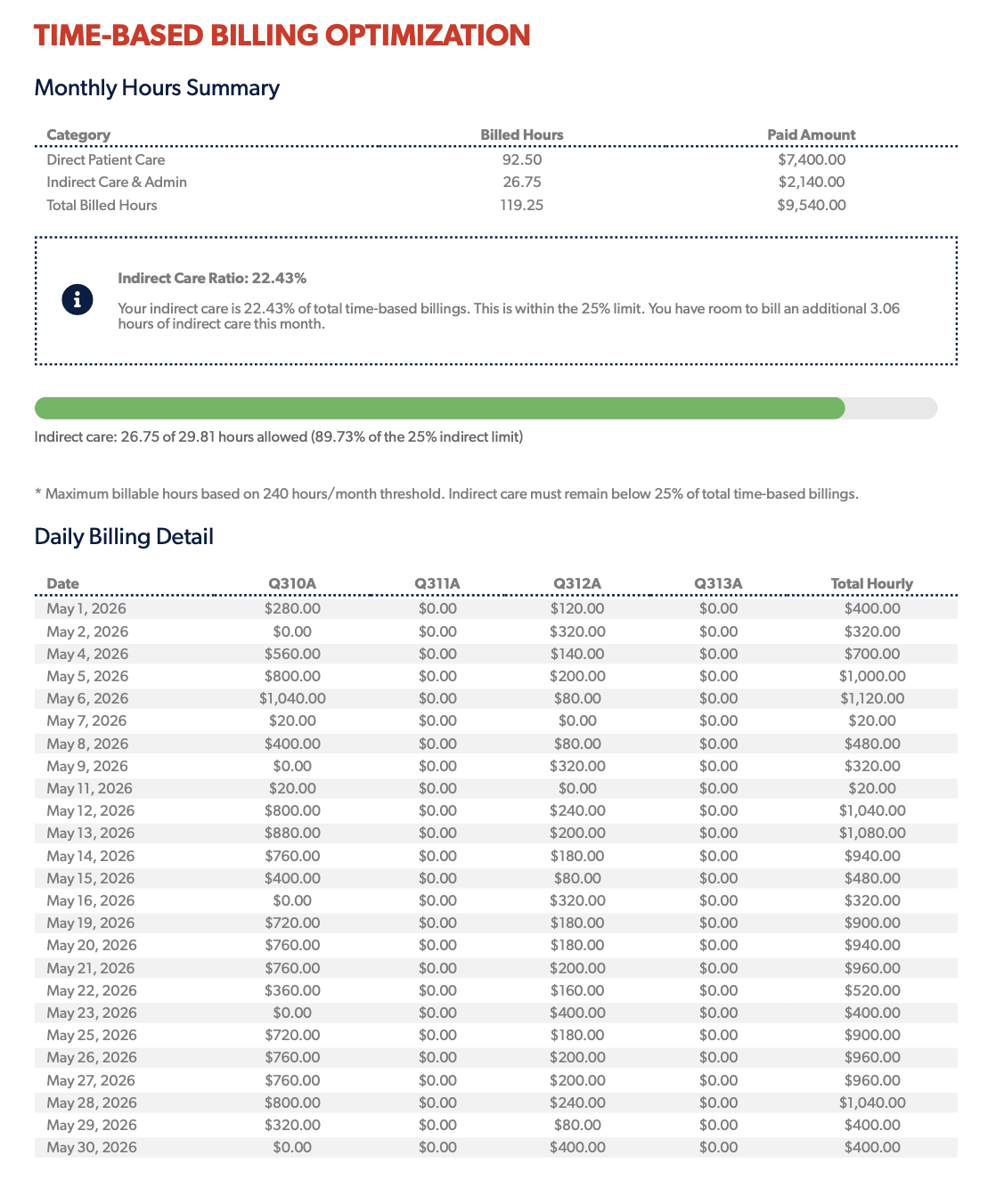
Practice Care brings your billable direct care, indirect care, and administrative hours into one report, allowing you to monitor progress toward monthly limits and identify eligible time that may not have been billed.
Want to learn more about hourly billing? Read our blog here.
2. Continuity of Care
Continuity of Care (CoC) continues to play a critical role under FHO+. Patients who receive care outside your practice contribute to outside use, which can significantly reduce your Continuity of Care percentage. If your Continuity of Care falls below the required 75% threshold, it can have a direct impact on your capitation payments.
The key isn’t simply reviewing your percentage after the fact; it’s monitoring trends early enough to take action.
What to review each month
- Current Continuity of Care percentage: Check your latest CoC percentage to see how much care your patients are receiving within your practice versus elsewhere.
- Rolling quarterly average: Review how your CoC percentage is trending over the past three months, so you can catch a decline early rather than after it’s affected your standing.
- Patients with high outside use: Identify specific patients who are frequently seeking care outside your practice, so you can follow up, understand why, and bring their care back in-house where possible.
How Practice Care helps
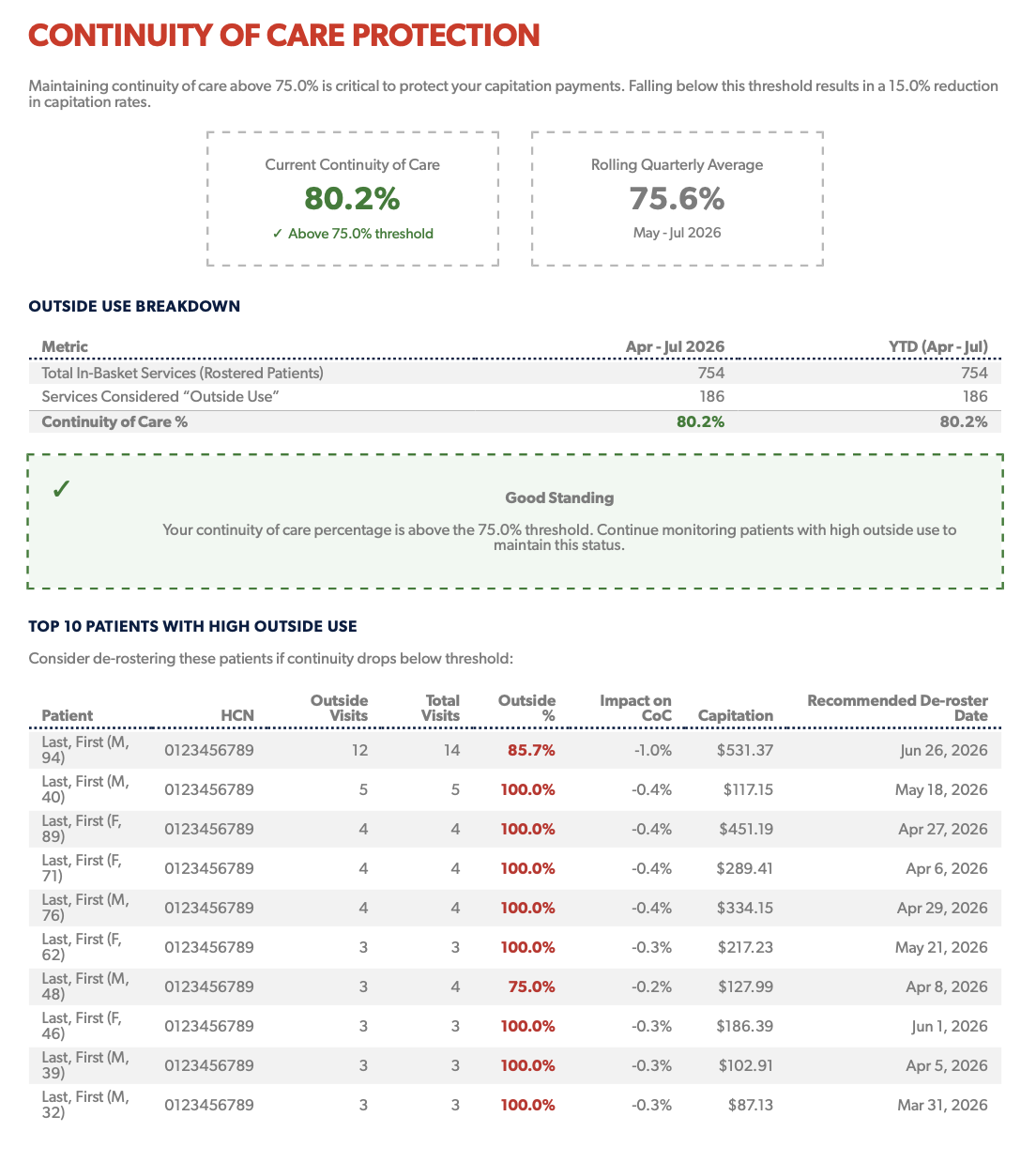
Practice Care allows you to monitor your current Continuity of Care performance alongside your rolling quarterly average while highlighting patients with high outside use. This gives you greater visibility into emerging trends before they begin affecting your revenue.
Looking for more information on Continuity of Care? Download our guide here.
Errors and Rejections
Accurate billing has always been a key part of physician compensation and your overall practice, but under FHO+, billing errors can carry greater financial consequences.
With the shadow billing payment rate for in-basket services increasing from 19.4% to 30%, rejected claims can have a greater impact on practice revenue than before.
Rather than waiting until payments are processed, it’s worth reviewing billing performance throughout the month.
What to review each month
- Rejected claims: Review any claims that were rejected by the Ministry, identify the reason for rejection, and correct and resubmit to avoid delays in payment.
- Billing errors: Check for mistakes like incorrect codes, mismatched patient information, incorrect diagnostic codes or missing details that could result in claim rejection.
- Time-based code validation: Confirm that codes requiring a minimum time spent with the patient are properly documented and supported.
- Recurring error patterns: Identify the same types of mistakes showing up repeatedly, since fixing the root cause can prevent ongoing revenue loss.
How Practice Care helps
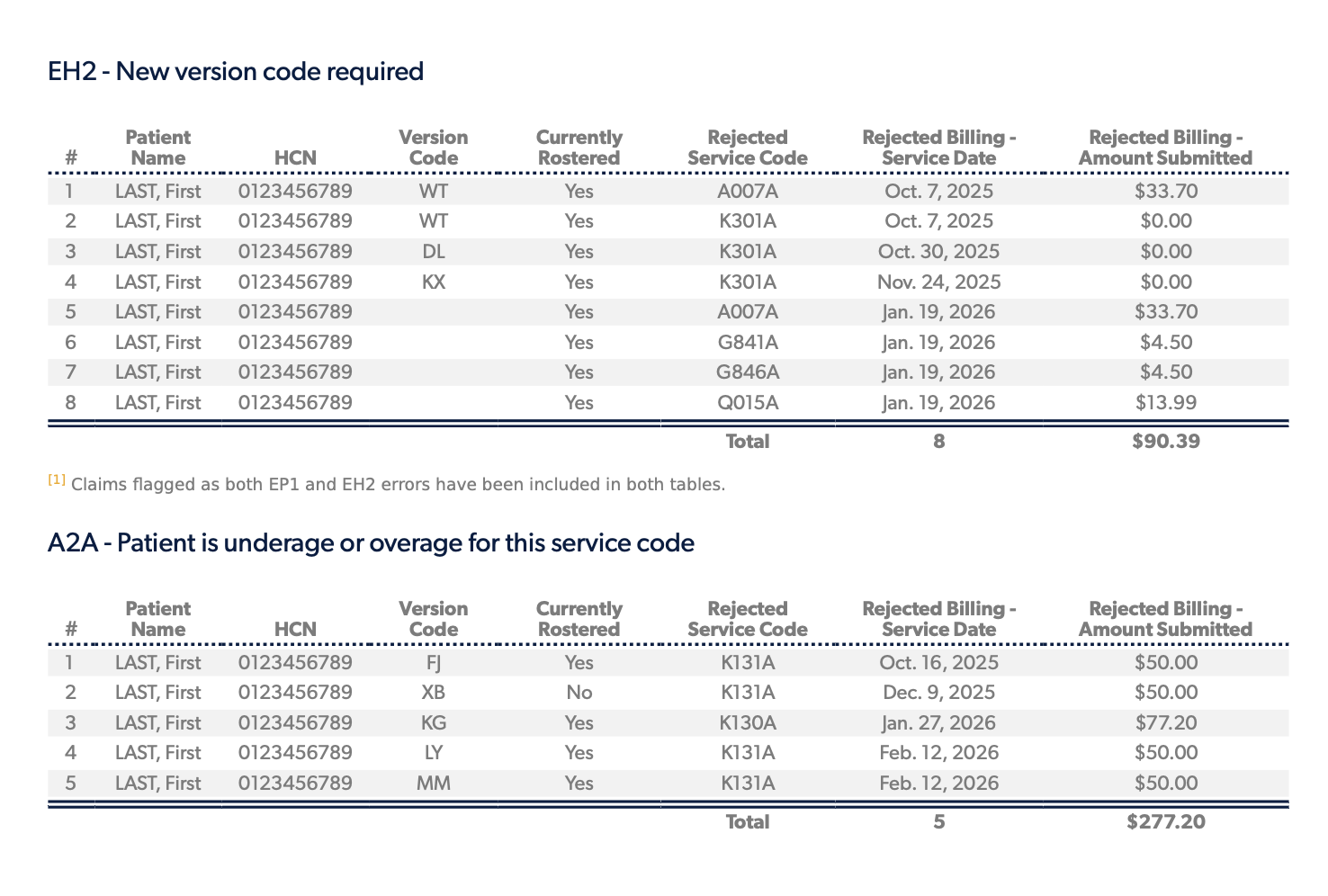
Practice Care helps you identify rejected claims and billing errors as they occur, making it easier to spot recurring issues and correct them before they become larger financial problems. We provide a categorized list of all Ministry billing errors for the month, making it easy to pinpoint gaps in your billing. Prefer to hand it off? DoctorCare can manage those errors on your behalf, so you never have to deal with the burden of billing errors again.
Read our recent blog on Billing Errors and Explanatory Codes for additional tips.
4. Roster Calibration
Patient rostering has become increasingly important under FHO+. An optimized roster supports more than capitation; it also contributes to preventive care incentives, premium eligibility, and stronger continuity performance. Even small gaps in roster management can affect both current income and future incentive opportunities.
What to review each month
- Roster accuracy: In many cases, the Ministry’s roster count is lower than what’s shown in the EMR. This mismatch can happen for several reasons, and it’s important to cross-reference both your EMR and the Ministry’s roster files to ensure there are no discrepancies, avoiding decreased capitation and billing errors in the future.
- Patient attachment: Review that active patients are formally attached to you as their primary provider versus receiving care elsewhere, so you are receiving your attachment bonuses, as well as increased capitation per patient.
- Inactive patients: Identify patients who haven’t been seen in an extended period, so you can reach out, update their status, or determine if they should remain on your roster.
- Preventive care completion: Track how many eligible patients are up to date on screenings and preventive services, since this affects both patient outcomes and related incentive payments.
How Practice Care helps
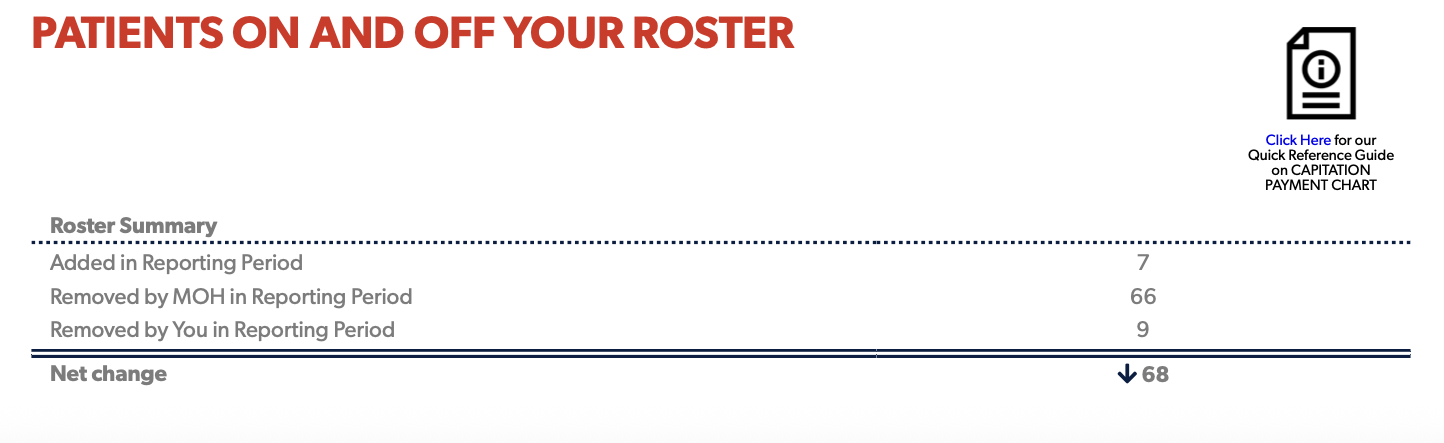
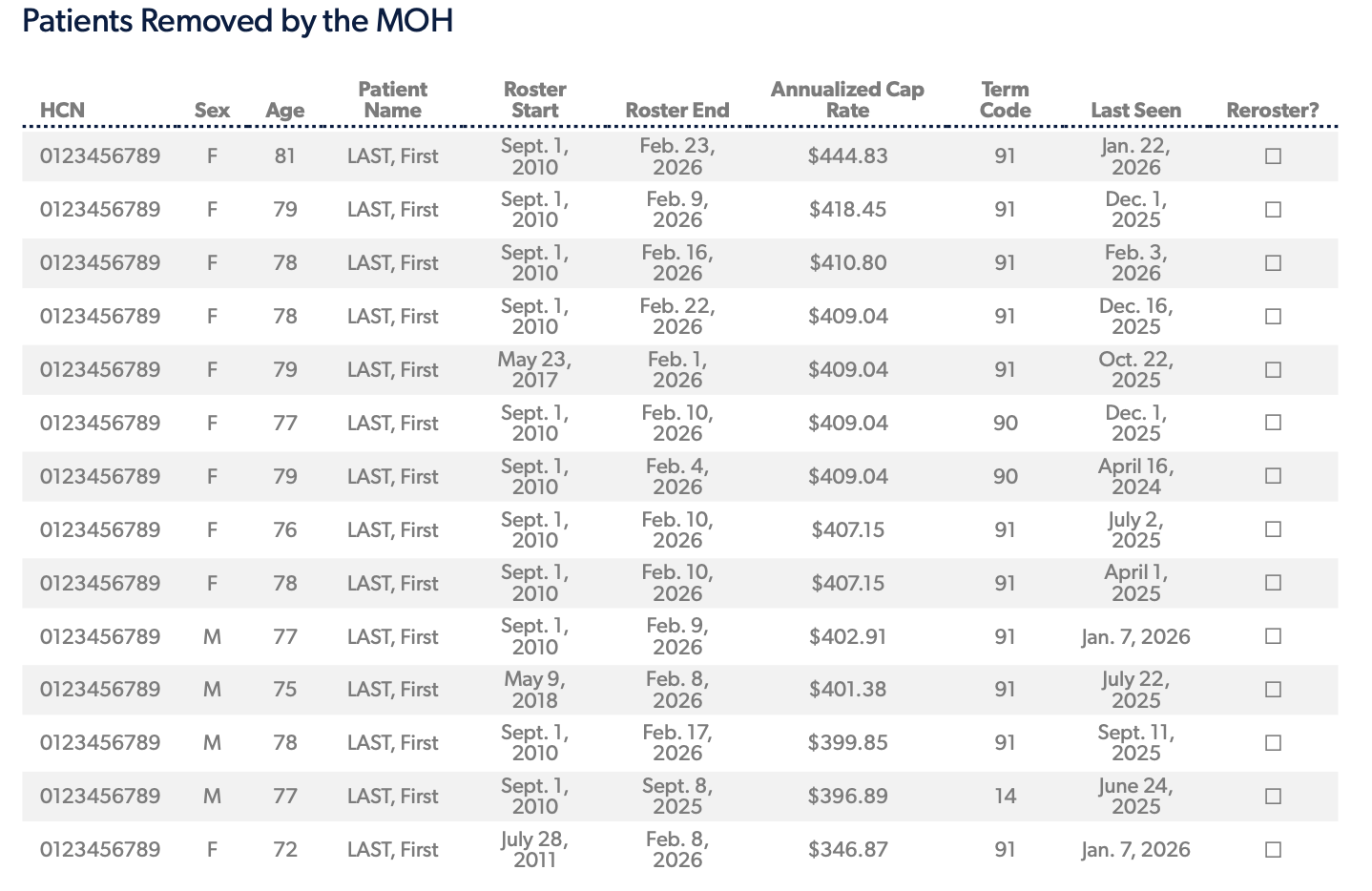
Practice Care gives you a clear picture of your patient roster, month over month, including who’s been added, removed, or flagged for rerostering, along with the reasons behind each change. This visibility helps you catch opportunities to improve attachment and continuity, such as re-enrolling patients who were removed in error or reconnecting with those who haven’t been seen recently.
By making roster management part of your regular monthly workflow, you can better position your practice to maximize both capitation and incentive payments throughout the year.
Conclusion
FHO+ has shifted physician compensation beyond traditional capitation to a model that places greater emphasis on accurate billing, continuity of care, and proactive practice management.
Rather than trying to piece together complex Ministry reports or waiting for your remittance advice to understand your performance, Practice Care gives you a centralized view of the metrics that matter most.
Through our work with DoctorCare clients, we’ve seen that practices reviewing their performance data on a regular basis are better positioned to identify missed revenue opportunities, address issues early, and adapt to the evolving FHO+ payment model.
Take the Guesswork Out of FHO+
Understanding your FHO+ performance shouldn’t require hours spent reviewing disconnected reports.
With Practice Care’s enhanced FHO+ reporting, you can monitor the key metrics that influence your revenue from one centralized dashboard.
Book a demo to explore the latest Practice Care reporting enhancements and see how your practice can gain greater visibility into its FHO+ performance.